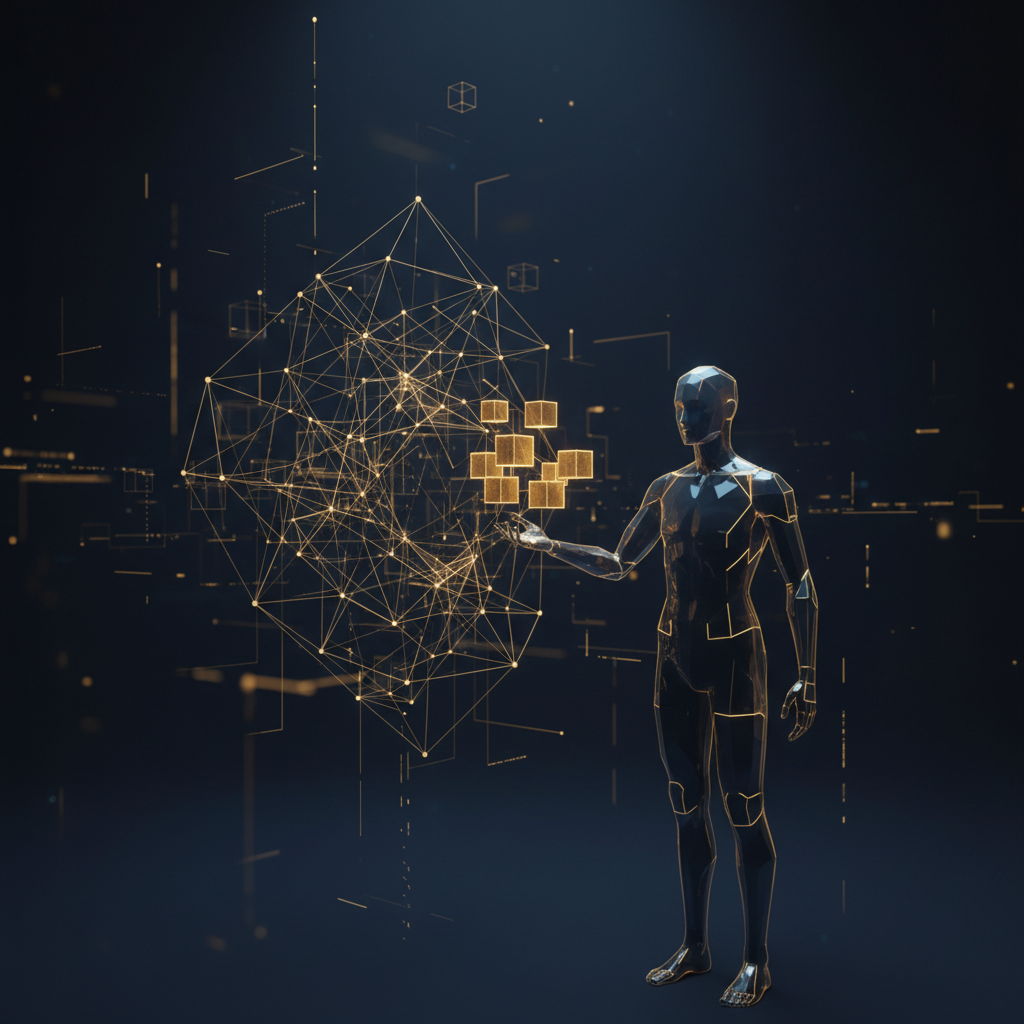
AI Agents: The Practical Path for SMEs to Tangible Automation
The discourse around Artificial Intelligence has, for too long, oscillated between hyperbole and overly academic abstraction. At AIKing Agency, we cut through the noise, focusing on the practical application of advanced AI to deliver measurable impact. For ambitious Small and Medium-sized Enterprises (SMEs), the immediate and profound opportunity lies not in generic LLM wrappers, but in the strategic deployment of AI agents.
Understanding the Agentic Leap
Forget chatbots that merely respond. AI agents are designed to act. They are autonomous entities, powered by large language models and other AI components, capable of perceiving their environment, reasoning about their goals, planning a course of action, and executing tasks – often across multiple systems. This isn't just a technical distinction; it's a fundamental shift in how businesses can leverage AI.
For an SME, this means moving beyond simple automation scripts. An agent can undertake complex, multi-step workflows that previously required significant human oversight, coordination, and decision-making. It's about empowering AI to not just assist, but to do.
The Real-World Impact for SMEs
Many SMEs operate with lean teams and constrained resources. The promise of AI agents here isn't just efficiency; it's about unlocking capacity, enabling growth, and establishing competitive advantage without exponentially increasing headcount.
Consider a few practical applications:
- Automated Customer Onboarding: An agent could receive a new client sign-up, initiate account creation across CRM and billing systems, send a personalised welcome email with relevant resources, schedule an introductory call with the sales team, and update internal project management boards – all autonomously, triggered by a single event.
- Dynamic Inventory Management: Beyond simple reorder points, an agent could monitor sales trends, supplier lead times, market demand shifts, and even external events (e.g., upcoming promotions, seasonal variations) to proactively adjust order quantities, negotiate with suppliers, and optimise warehousing, minimising waste and stockouts.
- Marketing Campaign Optimisation: Instead of relying on manual analysis, an agent could continuously monitor campaign performance across multiple channels, identify underperforming segments, suggest A/B test variations, and even reallocate budget in real-time based on predefined KPIs, reporting its actions and rationale to the marketing manager.
- HR Candidate Sourcing & Qualification: An agent could scour job boards, screen CVs against specific criteria, conduct initial conversational pre-qualifications via text or voice, schedule interviews, and manage communication with candidates, presenting a shortlist of highly relevant prospects to the hiring manager.
These aren't hypothetical scenarios. These are the intelligent systems we design and build for our clients, creating immediate and tangible uplift.
Overcoming Implementation Hurdles
The path to agentic automation isn't without its considerations. It requires a thoughtful approach to integration, data security, and ethical deployment. Unlike off-the-shelf solutions, bespoke AI agents are designed to fit the precise contours of your business processes and existing technological stack.
At AIKing, our process involves a deep dive into your operations, identifying the high-leverage areas where agentic workflows can deliver the most significant ROI. We then architect, build, and deploy these systems, ensuring they are robust, scalable, and operate with the necessary guardrails. We don't just provide technology; we provide a strategic partnership to embed intelligence into the core of your business.
The Economics of Agentic Automation
The economics favour early adopters. While initial investment is required, the long-term returns in terms of efficiency, reduced operational costs, enhanced customer experience, and the ability to scale without linear growth in human resources are substantial. For SMEs, this is not merely about doing more with less; it's about doing smarter with what you have, and creating new avenues for value creation that were previously out of reach.
The future of business efficiency isn't just about AI; it's about intelligent agents executing strategic work autonomously and reliably.